
Less than a month after the Gauteng Division of the High Court in Johannesburg barred Operation Dudula from harassing and intimidating migrants outside hospitals and schools, the same court has issued another judgment in a separate case, this time directed at the government and the SA Police Service (SAPS).
In a scathing judgment on Thursday, 4 December, Judge Stuart Wilson ordered multiple spheres of government and senior police officials to take immediate action to end the obstruction of access to public healthcare facilities in the province.
‘This cannot happen under our watch’
The case was brought by the Treatment Action Campaign (TAC), Doctors Without Borders, and Kopanang Africa Against Xenophobia, represented by SECTION27, in September against 15 government respondents, including provincial health authorities, the SA Police Service, district officials and clinic management structures. The application argued that these state bodies had failed to intervene when anti-migrant groups, including Operation Dudula, harassed migrants, pregnant women, children and people living with HIV, at public clinics.
TAC’s Gauteng provincial chairperson, Monwabisi Mbasa, said the final trigger was the escalation of violence and obstruction against groups already facing multiple layers of vulnerability.
advertisement
Don’t want to see this? Remove ads
“It was based on the persistence of that vigilantism now beginning to even attack pregnant and lactating women. We also saw this now going to elderly people as well, over and above the fact that, in the main, people living with HIV were being targeted. That triggered our consciousness to say: This cannot happen under our watch,” he explained.
Lerato-HospitalAccess-Judgement
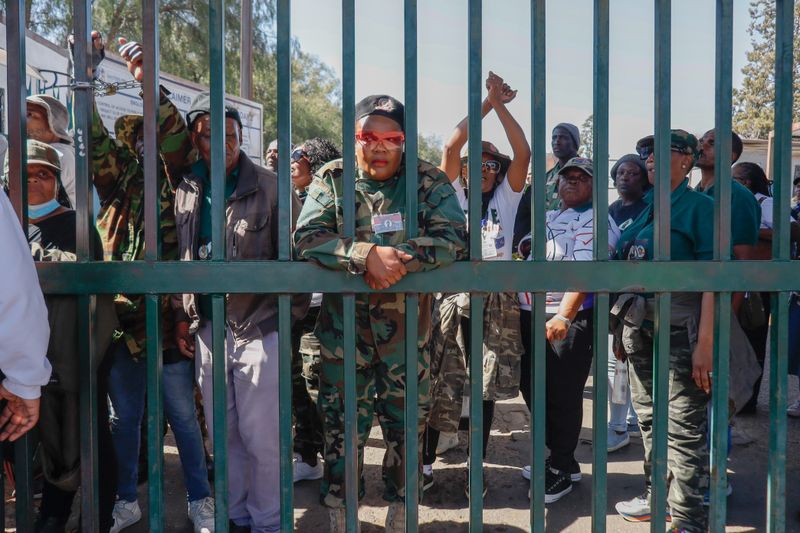
Operation Dudula members check the passports and IDs of people entering the Itereleng Clinic in Soweto on 16 July. (Photo: Fani Mahuntsi / Gallo Images)
Despite the recent court judgment in Kopanong Africa Against Xenophobia and Others v Operation Dudula and Others, which barred the obstruction of healthcare, TAC received reports that these practices had not stopped, although there was no indication whether the continued disruptions were directly linked to Dudula.
Read more: High court bans Dudula from blocking access to hospitals, clinics and schools
Mbasa said TAC’s community-based structures, made up largely of public healthcare users, monitored clinics across Gauteng, and observed that harassment, intimidation and gatekeeping by anti-migrant groups were still occurring at several facilities.
Incidents were recorded at Ivory Park, Tembisa, Diepsloot, Hillbrow Community Health Centre and Mamelodi Community Health Centre, suggesting a widespread and persistent pattern of obstruction.
One of the most concerning hotspots was Soshanguve, where individuals aligned with anti-migrant actions reportedly moved beyond obstructing access at clinic gates and entered clinic premises. In some cases, they monitored waiting areas and questioned patients about their eligibility for healthcare services. There were even accounts of them entering consultation rooms and disrupting patient–provider interactions.
The TAC has instructed its regional structures to compile detailed reports specifying the nature and location of these incidents. These reports aim to map precisely which units, such as chronic care sections, emergency rooms or waiting areas, are being affected.
Read more: How Dudula’s anti-migrant actions are reaching global attention in refugee applications
Court orders immediate action
In their responding affidavit, the national and provincial health departments argued that they had “outsourced” responsibility for the clinics to the City of Johannesburg through a service-level agreement. The judge rejected this argument outright.
The agreement, he said, did not absolve provincial or national departments of oversight duties. Instead, it required joint coordination, shared planning and co-responsibility between all three spheres of government, particularly where basic access was being obstructed.
advertisement
Don’t want to see this? Remove ads
The SAPS also came under sharp scrutiny. While the SAPS claimed its role was limited to responding to complaints, Judge Wilson highlighted the police’s constitutional mandate to prevent crime, maintain public order and protect all inhabitants.
He noted that the SAPS had already adopted a national instruction to protect non-nationals accessing health facilities — proof that the police recognised the need for proactive intervention.
The court granted extensive interim relief, directing 15 government respondents to immediately:
Ensure safe, unhindered access to the Yeoville and Rosettenville clinics;
Remove vigilantes and any unauthorised persons obstructing entry;
Deploy trained security personnel at all access points;
Post notices stating that obstruction of access is unlawful and will result in removal and police reporting;
Report incidents and collect information needed to identify perpetrators;
Work collaboratively across departments and law enforcement to implement these measures; and
File a compliance report within 10 court days.
Failure to act, Judge Wilson made clear, would be inconsistent with constitutional obligations and would violate the rights of some of the most vulnerable people living in South Africa.
The court further ordered the clinics to post notices stating:
“No unauthorised person may obstruct or hinder physical access to this clinic or the provision of healthcare services within the clinic. Any person violating this instruction will be removed from the premises and its surroundings and reported to the police.”